The New Power Map of Crypto: How ETF Flows Are Reshaping Bitcoin, Ethereum, and Solana
3-Point Summary
- Crypto ETFs allow investors to gain exposure to Bitcoin, Ethereum, and Solana without holding the actual assets.
- Latest U.S. ETF flows show strong institutional accumulation, led by Bitcoin and Ethereum.
- ETF inflows now significantly influence crypto market liquidity, price action, and long‑term adoption.

50-Second Shorts Video
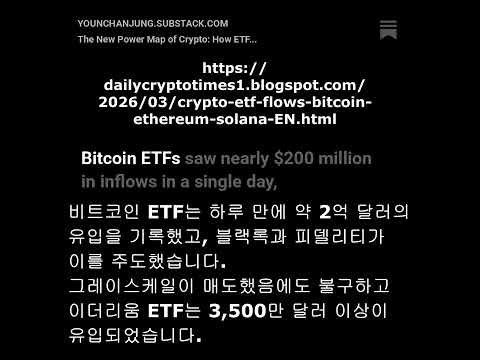
Watch this 50‑second video to get a quick overview before diving into the full ETF flow analysis below.
Crypto ETF Flows Explained: How Bitcoin, Ethereum, and Solana ETFs Shape the Market
What Is a Cryptocurrency ETF?
A cryptocurrency ETF (Exchange‑Traded Fund) is a publicly traded investment vehicle that tracks the price of a digital asset such as Bitcoin, Ethereum, or Solana. It allows investors to gain exposure to crypto markets without holding the actual coins.
Key Characteristics
- No need for wallets, private keys, or self‑custody
- Traded on regulated stock exchanges like traditional equities
- Tracks the price of the underlying crypto asset
- Managed by financial institutions that hold the crypto or replicate its price through derivatives
Crypto ETFs have become one of the most important bridges between blockchain technology and traditional finance.
How Do Investors Earn Returns from Crypto ETFs?
A. Capital Gains
If the underlying cryptocurrency increases in value, the ETF price rises accordingly. Investors profit by selling at a higher price.
B. Long‑Term Appreciation
Most crypto ETFs generate returns solely from price appreciation. (Some Ethereum ETFs may incorporate staking yield in the future, but this is not yet standard.)
C. Active Trading Strategies
Because ETFs trade like stocks, investors can use:
- short‑term trading
- swing trading
- volatility‑based strategies
This flexibility makes ETFs attractive to both institutional and retail traders.
Latest U.S. Spot Crypto ETF Flows (March 16, 2026)
According to the latest data from Crypto Patel, U.S. spot crypto ETFs recorded strong net inflows, led by Bitcoin and Ethereum.
Total Net Inflow: ≈ $232.86 million
1. Bitcoin ETF Flows
- +2,740 BTC purchased
- ≈ $199.40 million in net inflows
U.S. Bitcoin ETFs bought the equivalent of nearly six days of mined Bitcoin supply in a single day.
Major Buyers
- BlackRock: +1,920 BTC (≈ $139.40M)
- Fidelity: +886 BTC (≈ $64.50M)
Bitcoin remains the primary asset for institutional accumulation.
2. Ethereum ETF Flows
- +16,485 ETH purchased
- ≈ $35.90 million in net inflows
Issuer Breakdown
- BlackRock: +6,940 ETH (≈ $16.20M)
- Fidelity: +16,026 ETH (≈ $34.90M)
- Grayscale: –7,000 ETH (≈ –$15.20M)
Despite Grayscale’s selling, overall inflows remain strong.
Ethereum’s Financial Evolution: Beyond ETFs and Toward Staking‑Based Finance
Ethereum is experiencing a deeper financial transformation that goes beyond simple ETF inflows.
Institutions like BlackRock are not only accumulating ETH — they are actively exploring ways to turn Ethereum staking into a Wall Street‑grade yield product.
This shift carries major implications:
- Ethereum is evolving into an income‑producing financial asset
- It offers a staking‑based yield model that Bitcoin cannot provide structurally
- It lays the foundation for a future “Internet of Bonds” built on Ethereum’s staking economy
In other words, ETF inflows are just one part of a broader trend: Ethereum’s role in global finance is expanding rapidly.
3. Solana ETF Flows
- +27,757 SOL purchased
- ≈ $2.10 million in net inflows
Solana continues to attract steady institutional interest, solidifying its position as the leading alternative asset after BTC and ETH.
4. Other ETF Flows
- Chainlink: +91,040 LINK (+$904K)
- Avalanche: +51,760 AVAX (+$532K)
- XRP: –4.13M XRP (–$5.98M)
- LTC, HBAR, DOGE, DOT: 0
Liquidity is clearly concentrating around BTC, ETH, and SOL.
Why ETF Flows Matter for Blockchain Markets
A. Blockchain Provides the Underlying Asset
Crypto ETFs track tokens that exist on blockchain networks. Without blockchain, the ETF cannot exist.
B. ETFs Bring Traditional Finance Into Crypto
They allow institutions and retail investors to access crypto through regulated markets, leading to the following improvements in the crypto market:
- increased crypto market liquidity
- broader crypto adoption
- greater market depth and stability
C. ETF Flows Directly Influence Supply and Demand
- Inflows → issuers buy crypto → upward price pressure
- Outflows → issuers sell crypto → downward price pressure
ETF activity has become one of the strongest forces shaping crypto price dynamics.
D. ETFs Enhance Regulatory Legitimacy
ETF approval signals that regulators recognize crypto as a legitimate asset class, boosting:
- trust
- institutional participation
- long‑term ecosystem growth
Conclusion
Crypto ETFs have become a central pillar of the digital asset ecosystem. The latest data shows:
- Bitcoin remains the dominant institutional asset
- Ethereum is rapidly expanding its financial role through both ETF inflows and staking‑based innovation
- Solana is emerging as the fastest‑growing alternative asset
- ETF flows now significantly influence market sentiment and price action
As traditional finance and blockchain continue to converge, ETFs will play an increasingly important role in shaping the future of digital assets.
Younchan Jung
Researcher exploring structural shifts in AI, blockchain, and the on‑chain economy.
If you would like to read this article in Korean, please click the button below.


댓글
댓글 쓰기